
Last Updated on October 2, 2026
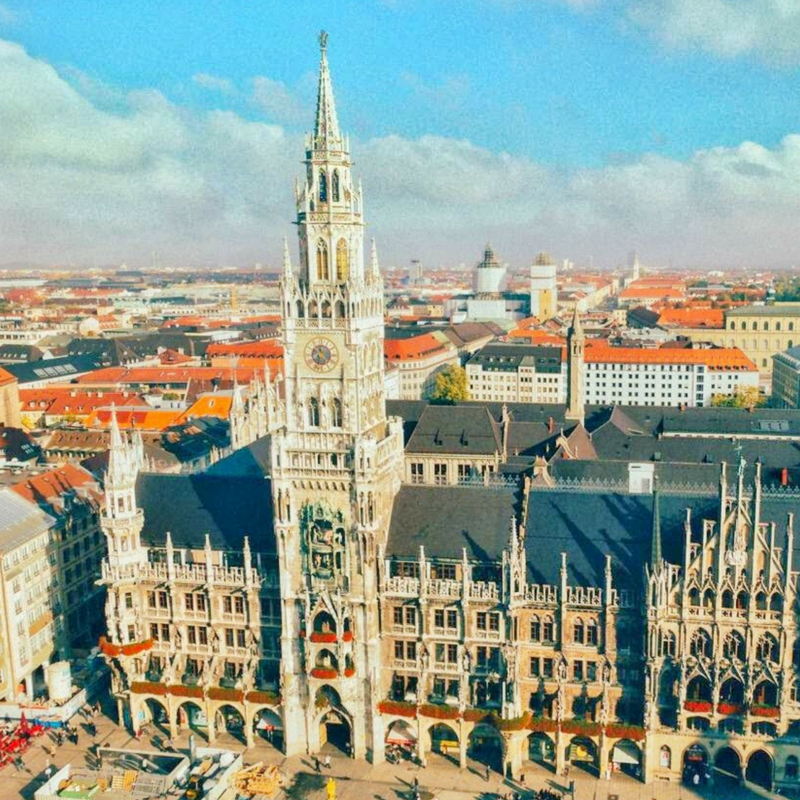
If you’ve been to Berlin and think you know Germany, Munich will completely surprise you. The two cities are day and night — Berlin is edgy and alternative, while Munich is polished, traditional, and, honestly, a little bit golden. I mean that literally: the cream-coloured buildings with their gilded details give the whole city a warm, almost regal glow that I wasn’t expecting.
Munich is the capital of Bavaria and the home of Oktoberfest, so yes, beer is a very big deal here. But there’s so much more to this city than steins and pretzels — baroque palaces, world-class museums, one of Europe’s best urban parks, and a food scene that goes well beyond sausage. Whether you’re visiting for a weekend or a full week, this Munich bucket list covers everything you need to see, do, eat, and experience.
VISITING MUNICH: THE ESSENTIALS
Transport / Munich is well connected by air and rail. Trains from Frankfurt take around 3 hours and from Vienna around 4 — book in advance on Trainline for the best fares. Flying in? Book a private airport transfer with WelcomePickups so you’re not hunting for taxis after a long flight.
Tours / Munich rewards a guided tour. Here are the best ones:
Viktualienmarkt: 2-Hour Gourmet Food Tour Munich
Munich Third Reich & WWII Walking Tour
Dachau Concentration Camp Half-Day Tour from Munich
Munich Hop-On/Hop-Off Sightseeing Tour – 24h/48h Ticket
FC Bayern München Football Tour
Munich: An Evening of Bavarian Beer and Food Culture
Stay / From lively hostels near the Hauptbahnhof to boutique hotels in Schwabing, Munich has options at every budget. Search Munich hotels here.
Car Rental / Planning a day trip to Neuschwanstein, the Bavarian Alps, or Lake Starnberg? Hiring a car gives you a lot of freedom. Compare prices on DiscoverCars.
Connect / Stay connected from the moment you land with an eSIM — I use Sim Local and you can get 5% discount with code TRAVELWITHPAU.
Get Insured / Things can and do go wrong when you travel. World Nomads offers coverage for over 150 activities as well as emergency medical, lost luggage, trip cancellation and more.
Table of Contents
Best Time to Visit Munich
Munich is a year-round destination, but the timing of your visit really does shape your experience.
Summer (June–August) is my personal favourite. The city comes alive — the beer gardens are packed, the Englischer Garten is buzzing, and you can swim in the Eisbach river. Temperatures sit around 22–28°C and the long evenings are perfect for lingering over a Helles.
Autumn (September–October) means Oktoberfest, which runs from mid-September to the first weekend of October. If that’s your thing, book accommodation months in advance — the city fills up fast and prices skyrocket.
Winter (November–February) is cold (often below freezing), but Munich’s Christmas markets are genuinely magical, especially around Marienplatz. The museums and palaces are quieter too, which I always appreciate.
Spring (March–May) is a lovely shoulder season — the beer gardens start opening, the crowds haven’t arrived yet, and the gardens around Nymphenburg Palace are beautiful.
Munich Bucket List: 20 Things to Do
1. Drink multiple litres of Helles or Weizen
Let’s start where Munich starts: beer. Bavarians take their brewing seriously — per capita beer consumption here is among the highest in the world, and once you’ve tasted a fresh Helles (light lager) or Weizen (wheat beer) straight from a local brewery, you’ll understand why.
The big Munich breweries are Augustiner, Hofbräu, Paulaner, Hacker-Pschorr, Löwenbräu, Spaten, and Franziskaner. A visit to the Hofbräuhaus is practically mandatory — it’s touristy, yes, but it’s also an experience in itself. My personal favourite, though, is Augustiner-Keller, which feels more local and has a beautiful beer garden. Order a pretzel if you’re on an empty stomach, and don’t skip the Schnitzel.
Tip: A Mass (1-litre stein) costs around €10–15. Pace yourself accordingly. Want to make a proper evening of it? The Guided Tour of Munich’s Famous Beer Halls and Breweries takes you to the best spots with a local who knows their Helles from their Weizen.
2. Swim or surf at the Englischer Garten
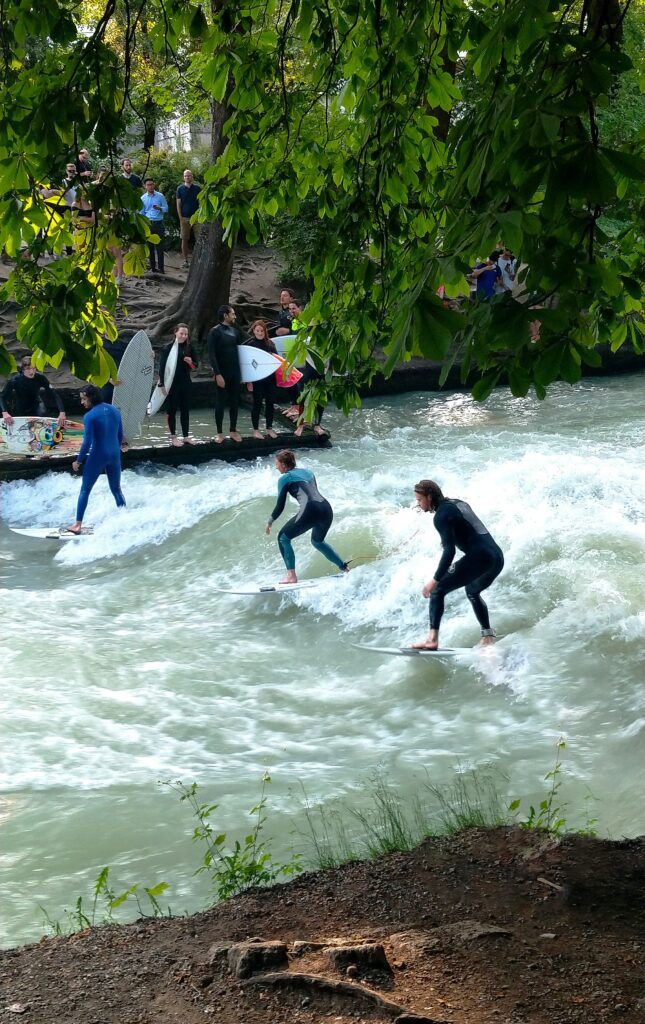
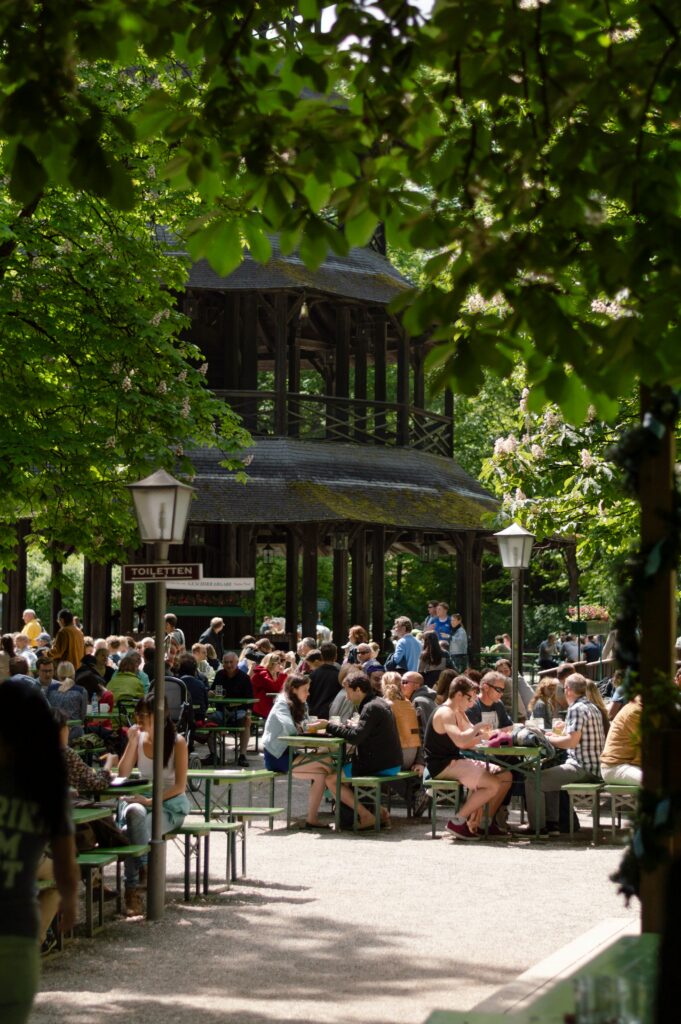
The Englischer Garten is one of the finest urban parks I’ve ever visited — and I’ve visited a lot. It’s bigger than New York’s Central Park, which already tells you something, but the real magic is in the details: a Chinese Tower with a beer garden next to it, meadows full of sunbathers, and a stream where, in summer, people actually swim and let the current carry them along.
The most jaw-dropping sight, though, is the Eisbachwelle — a standing wave in one of the garden’s streams where surfers (real surfers, with wetsuits and boards) ride 24/7, even in January. Even if you’re not surfing, walk past to watch. It’s surreal in the best possible way.
Beer garden tip: Follow the Chinese Tower — there’s a beer garden right beside it seating 7,000 people. It’s a Munich institution.
3. Explore Marienplatz and climb St Peter’s Church
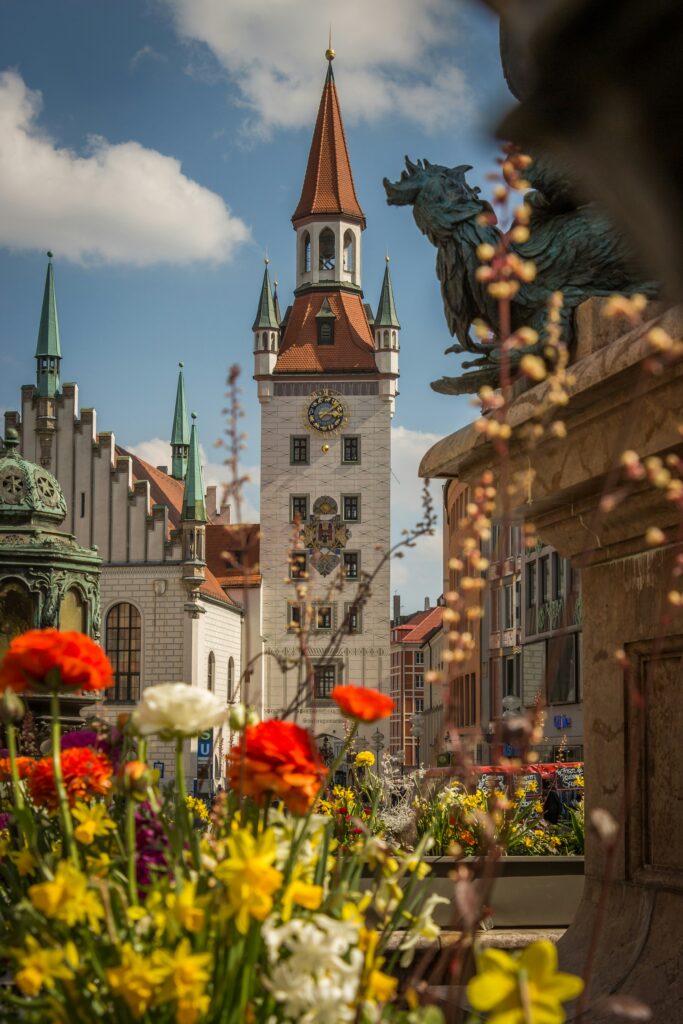
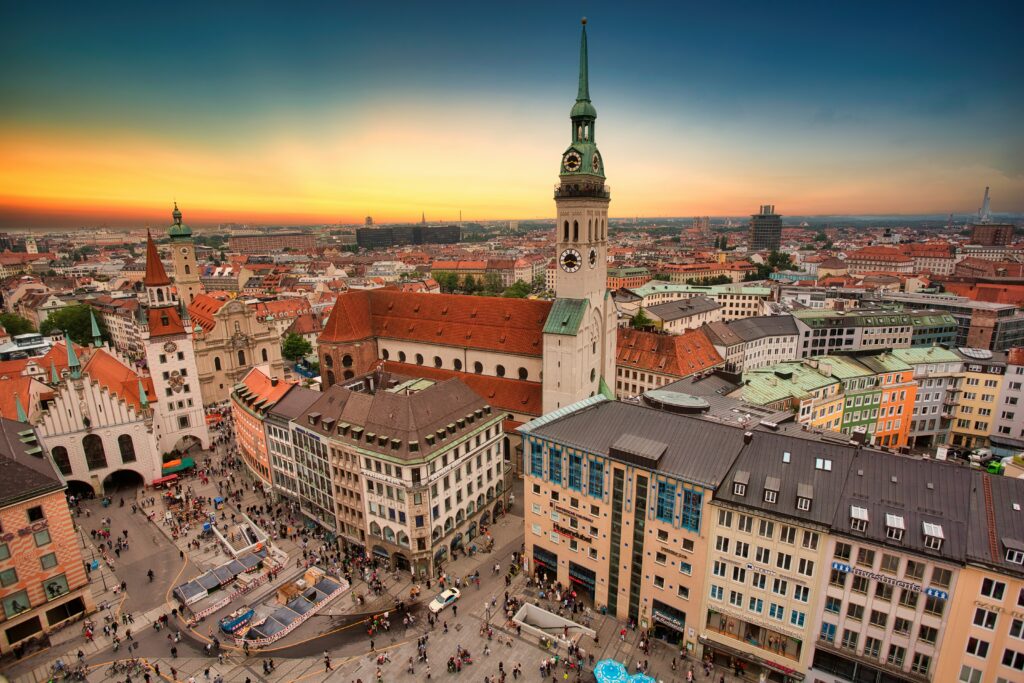
Marienplatz is the heart of Munich and one of the most architecturally stunning city squares in Europe. The Neues Rathaus (New City Hall), with its neo-Gothic facade, dominates the square, and its Glockenspiel — a giant carillon with rotating figures — puts on a show daily at 11am and 12pm (and 5pm in summer). It sounds more impressive than a music box, I promise.
For the best view of the whole scene, climb the 306 steps of St Peter’s Church tower (Alter Peter). On a clear day you can see the Alps in the distance. Go in the morning before the crowds arrive.
Practical info: Glockenspiel show is free to watch from the square. St Peter’s tower costs €5/adult.
4. Take a walking tour
If you want to understand Munich’s history — and there is a lot of it — a walking tour is the best way to start. The Munich Third Reich & WWII Walking Tour is excellent — it covers the Nazi history of the city in depth and is one of the most informative ways to understand this chapter of Munich’s past.
5. Graze your way through the Viktualienmarkt
The Viktualienmarkt is a gourmet open-air market right in the centre of the city, and it’s one of those places that manages to feel both touristy and genuinely local at the same time. Münchners shop here for fresh produce, cheese, bread, and deli items every day.
My approach: grab a coffee, pick up some local cheese and charcuterie, and eat standing up like everyone else. There’s also a small beer garden in the middle of the market — because of course there is. If you want to go deeper, the Viktualienmarkt 2-Hour Gourmet Food Tour is a great way to taste your way through the market with a local guide.
6. Visit the BMW Museum
For anyone who loves cars (or engineering, or design), the BMW Museum and the adjacent BMW Welt are worth the journey out to the Olympic Park area. The museum traces the history of the brand from its origins to the present day, with beautiful vintage cars, motorcycles, and concept vehicles on display. BMW Welt next door is free to enter and showcases current and future models.
Practical info: BMW Museum admission is €17/adult. BMW Welt is free.
7. Have lunch at Katzentempel cat café
Katzentempel is Germany’s first cat café, and it’s exactly as delightful as it sounds. You eat surrounded by six resident cats who do exactly what they want — ignore you, climb on you, or fall asleep on your lap mid-lunch. The café is also fully vegan-vegetarian (the only exception being organic cow’s milk), so the food is creative and actually good. The highlight of my visit was a cat that decided my bag was a bed and refused to move.
Book in advance — it fills up quickly and there are limited spots.
8. Visit Dachau Concentration Camp
This isn’t the easiest item on the bucket list, but it is one of the most important. Dachau was the first concentration camp established in Nazi Germany and is now a memorial site and museum. A visit is sobering and, at times, deeply difficult — but it’s also essential. The exhibitions are thorough, the documentation is unflinching, and the experience stays with you.
Entry is free. Allow a full day. You can get there by S-Bahn from Munich central station (around 25 minutes) or book the Dachau Concentration Camp Half-Day Tour from Munich— it includes transport and a guide, which really adds to the experience.
9. Have a picnic at the Olympic Park
Olympiapark was built for the 1972 Summer Olympics and is one of those rare examples of 1970s architecture that has aged beautifully. The sweeping tent-like roof structures are still extraordinary, and the park itself — with its lake, meadows, and hills — is a wonderful place to spend a lazy afternoon.
Grab a picnic from Viktualienmarkt, find a spot on the grass, and watch the city go by. The Olympic Tower (Olympiaturm) has a viewing platform and a revolving restaurant at the top if you want to go higher.
Practical info: Olympic Park entry is free. Olympic Tower is closed for renovation until Q4 2027.
10. Coffee with a view at Vorhoelzer Forum
This is one of Munich’s best-kept secrets. The Vorhoelzer Forum is a café on the rooftop terrace of the Architecture Department at the Technische Universität München, and the views over the city are spectacular — especially at sunset. It’s simple, quiet, and completely free of tourists. Just order a coffee, find a spot on the terrace, and enjoy.
Tip: It’s only open during university term time, so check before you go.
11. Visit Nymphenburg Palace
If baroque architecture and royal history are your thing, Nymphenburg Palace is unmissable. It was the summer residence of the Wittelsbach dynasty — Bavaria’s royal family — and the interiors are as lavish as you’d expect: gilded ceilings, grand portraits, and room after room of extraordinary craftsmanship.
Outside, the formal gardens stretch for kilometres and are free to wander. In summer, the fountains are switched on and the whole place looks even more cinematic.
Practical info: Full palace admission is €20/adult (Apr–mid Oct) or €16/adult (Oct–Mar), covering the palace, pavilions, and carriage museum. Palace only is €10/adult. Gardens are free. Under 18s free. Book your Nymphenburg Palace admission ticket to skip the queue.
12. Explore the Munich Residenz
f Nymphenburg is Munich’s summer palace, the Residenz is its winter one — and it’s an entirely different beast. Located right in the city centre, this is the largest urban palace in Germany, with 10 courtyards, 130 rooms, and a history stretching back to the 14th century. The sheer scale of it is staggering, and the interiors get progressively more jaw-dropping the further in you go.
Highlights include the Antiquarium — a 69-metre Renaissance banqueting hall covered floor-to-ceiling in frescoes, widely considered one of the finest Renaissance interiors north of the Alps — the Cuvilliés Theatre, an extraordinarily ornate Rococo court theatre that’s still used for performances today, and the Schatzkammer (Treasury), which holds centuries of Bavarian royal jewels, crowns, and regalia. Allow at least two hours; the Residenz has a habit of swallowing entire afternoons.
Practical info: Residenzmuseum admission is €10/adult; combined ticket with Treasury is €15/adult; all three (museum, Treasury, Cuvilliés Theatre) is €20/adult. Under 18s free.
13. Have Weißwurst for breakfast
Weißwurst — white sausage made from veal and pork — is one of Munich’s most beloved traditions. What makes it unusual is that it must be eaten before noon (traditionally, it was made fresh each morning with no preservatives and would spoil by midday). The full Bavarian breakfast is: Weißwurst, sweet mustard, a pretzel, and — yes — a Weizen beer, even at 9am. When in Munich.
The best place to try it is Weisses Brauhaus near Marienplatz. Sit at a communal table, suck the sausage out of its skin (don’t eat the skin), and enjoy.
14. Explore the Pinakothek museums
Munich has an exceptional cluster of art museums in its Kunstareal (art quarter). The Alte Pinakothek holds one of the finest collections of Old Masters in the world, spanning medieval through Rococo. The Pinakothek der Moderne covers 20th and 21st century art, design, and architecture. The Neue Pinakothek (currently under restoration) covers 18th and 19th century art. You won’t do all three in one day — pick one or two based on your interests.
The Deutsches Museum on the Isar island is also worth a mention: it’s the world’s largest science and technology museum and has an astonishing range of exhibits across aviation, chemistry, marine technology, and more.
15. Admire the churches
Two Munich churches deserve a place on your map. The Asamkirche (Asam Church) is small but absolutely overwhelming — every surface is covered in Baroque decoration, gilded stucco, and fresco. It’s almost too much, and that’s the point. Then walk to the Theatinerkirche, which is the opposite: a serene, almost entirely white interior with beautiful detailing. Both are free to enter and are conveniently close to Marienplatz.
16. Try ice cream at Der Verrückte Eismacher
If you stumble across a queue outside a small, Alice in Wonderland-decorated ice cream shop, you’ve found Der Verrückte Eismacher (The Crazy Ice Cream Maker). The flavours change seasonally and include things like beer, Schnitzel and chips, potato salad, and spinach. Yes, really. There are also more conventional flavours, many suitable for vegans. It’s bizarre and wonderful in equal measure.
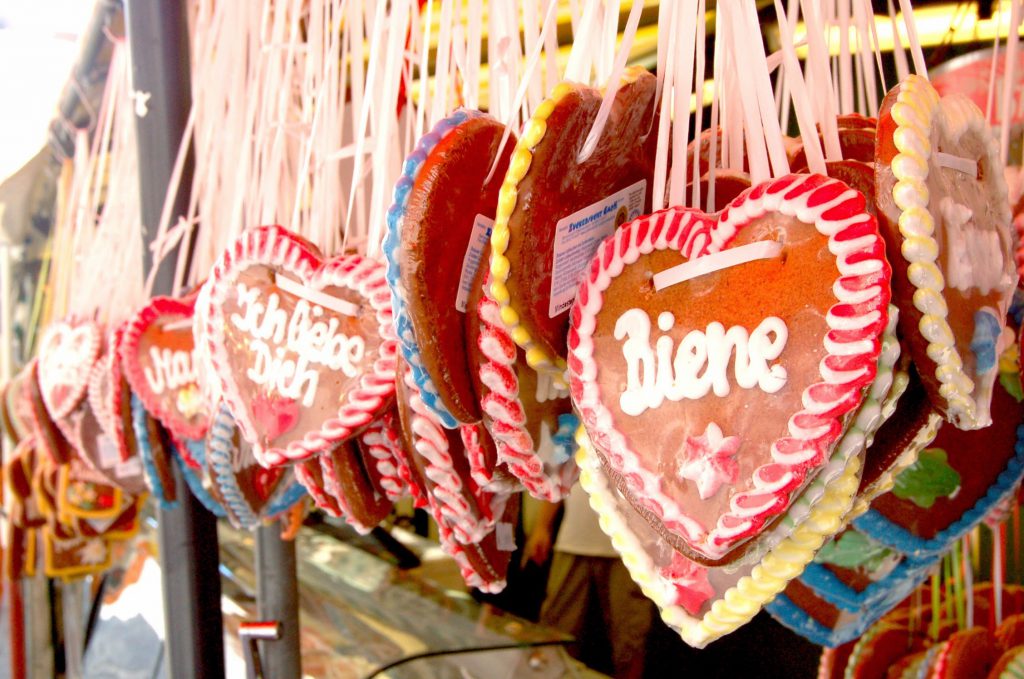
17. Shop (or stroll) along Kaufingerstrasse
Kaufingerstrasse and its extension Neuhauser Strasse form Munich’s main pedestrianised shopping street and one of the busiest in Germany. Even if you’re not in the mood to shop, it’s worth a walk — there are street performers, market stalls, cafés, and the sheer buzz of the city going about its business. It connects Marienplatz to Karlsplatz (Stachus) and is a natural route between the two.
18. Wander through the Hofgarten
Tucked between the Residenz and the English Garden, the Hofgarten is one of Munich’s most elegant and underrated spaces. It was laid out in the early 17th century as the private court garden of the Wittelsbach dynasty, and it still has that formal, serene quality — symmetrical pathways, a circular Temple of Diana at its centre, and arcaded galleries lining the perimeter that are covered in Renaissance frescoes. Most visitors walk straight past it on their way to or from the Residenz, which means it’s almost always peaceful. A lovely spot to slow down for ten minutes.
Practical info: Free to enter. Enter from Odeonsplatz — you’ll recognise the yellow arcades immediately.
19. Walk or cycle along the Isar
The Isar river runs right through the heart of Munich and the banks on either side are one of the city’s best-kept secrets. In summer, Münchners flock here — swimming in the river, sunbathing on the gravel banks, barbecuing in the evening. The stretch between the Deutsches Museum island and the Flaucher (a popular beer garden to the south) is particularly lovely on foot or by bike. It’s a side of Munich that feels completely local, completely relaxed, and miles away from the tourist trail.
Tip: Bikes can be hired through the MVG Rad city bike share scheme or from various rental shops near the Hauptbahnhof.
20. Visit Villa Stuck
The Villa Stuck was the home and studio of the Symbolist painter Franz von Stuck, who built it in 1898 as a total work of art — architecture, interior design, and painting all conceived together. The result is one of the finest examples of Art Nouveau in Germany: opulent, atmospheric, and unlike anything else in Munich. The permanent collection includes Stuck’s own paintings (bold, mythological, often unsettling) alongside changing contemporary exhibitions that use the villa as a backdrop. It’s the kind of place that surprises you.
Practical info: Admission is around €9/adult. Browse Villa Stuck tours and tickets here.
Munich Day Tours
One of the best things about Munich is its location — you’re within easy reach of some of Bavaria’s most spectacular scenery and a handful of world-class attractions. These are the day trips most worth your time:
- From Munich: Neuschwanstein Castle Full-Day Trip — the fairy-tale castle that inspired Disney, about 2 hours from Munich. One of the most iconic sights in Europe.
- Munich: Day Trip to Salzburg with Flexible Return — Mozart’s birthplace is just 90 minutes by train. Gorgeous old town, Sound of Music filming locations, and excellent coffee.
- From Munich: Guided Group Tour to Eagle’s Nest — Hitler’s former mountain retreat above Berchtesgaden, now a historic site with jaw-dropping Alpine views.
- From Munich: Zugspitze Mountain Van Tour — ride a cable car to the summit of Germany’s highest peak at 2,962m, with views across four countries on a clear day.
- From Munich: Königssee Day Tour by Van — one of Bavaria’s most beautiful Alpine lakes, with an electric boat trip and the iconic St Bartholomä church on the water’s edge.
- From Munich: Rothenburg & Romantic Road Day Trip by Bus — a perfectly preserved medieval walled town straight out of a fairy tale, one of the most photogenic places in Germany.
Where to Stay in Munich
Munich has accommodation across every budget, but it’s worth noting that the city is one of Germany’s pricier destinations — especially during Oktoberfest, when prices double or triple and rooms sell out months in advance.
Budget: Wombats City Hostel Munich is genuinely one of the best hostels I’ve stayed in anywhere — clean, social, brilliantly located near the Hauptbahnhof (main station), and with a rooftop bar. Great for solo travellers.
Mid-range: Hotel Uhland is my pick — a family-run 19th-century mansion on a quiet, leafy street between the Hauptbahnhof and the Englischer Garten. Spacious, well-reviewed rooms, free parking, and the kind of charm you won’t get from a chain hotel.
Splurge: The Mandarin Oriental and the Bayerischer Hof are Munich institutions if you want the full luxury experience.
Search and compare Munich hotels here →
Getting to Munich
By air: Munich Airport (MUC) is one of Europe’s major hubs, with direct flights from most UK airports. From the airport to the city centre, the S-Bahn (S1 or S8) takes around 40 minutes. Alternatively, book a private airport transfer with WelcomePickups — it’s stress-free, fixed-price, and your driver will be waiting when you land.
By train: Munich Hauptbahnhof is one of Germany’s busiest rail hubs. Direct trains from Frankfurt take around 3 hours; from Vienna it’s about 4 hours. It’s a scenic and relaxed way to arrive.
By car: Munich is well connected to the German motorway network. If you’re planning to explore Bavaria — the lakes, Neuschwanstein Castle, the Alps — hiring a car makes a lot of sense. Compare rental car prices with DiscoverCars to find the best deal.
Best Munich Tours
If you want to go beyond the bucket list and get more out of your time in Munich, a guided tour is worth it. These are my top picks:
- Munich Third Reich & WWII Walking Tour — the most informative way to understand Munich’s Nazi history
- Dachau Concentration Camp Half-Day Tour from Munich — includes transport from Munich and a knowledgeable guide
- Munich Hop-On/Hop-Off Sightseeing Tour – 24h/48h Ticket — the easiest way to cover the city’s highlights at your own pace
- Munich: An Evening of Bavarian Beer and Food Culture — the best way to discover Munich’s legendary beer culture with a local guide
- Viktualienmarkt: 2-Hour Gourmet Food Tour Munich — taste your way through Munich’s famous gourmet market with a local guide
- FC Bayern München Football Tour — a must for football fans, tour the home of one of Europe’s biggest clubs
- Day trip to Neuschwanstein Castle — one of the world’s most famous castles is just 2 hours away
Browse all Munich tours and experiences here →
How Long to Spend in Munich
2 days: You can hit the highlights — Marienplatz, the Englischer Garten, Hofbräuhaus, Nymphenburg Palace, and a good meal or two. It’s tight but doable.
3–4 days: The sweet spot. Enough time to visit Dachau, the BMW Museum, the Pinakothek museums, and still have a lazy afternoon in a beer garden without feeling rushed.
5–7 days: If you want to use Munich as a base for day trips — Neuschwanstein Castle, the Bavarian Alps, Salzburg in Austria — you’ll want at least 5 days.
Munich FAQ
When is the best time to visit Munich?
June and July are my personal favourites — warm, sunny, and perfect for beer gardens and the Englischer Garten. If Oktoberfest is on your list, go in late September, but book accommodation at least 6 months ahead.
How many days do you need in Munich?
Three to four days is the sweet spot to cover the main sights without feeling rushed. Add extra days if you want to do Dachau and at least one day trip into Bavaria.
Is Munich expensive?
By German standards, yes — it’s one of the priciest cities in the country. Budget around €15–20 for a sit-down meal, €10–12 for a litre of beer in a beer garden, and €100–150/night for a mid-range hotel. Book accommodation early, especially if visiting during Oktoberfest.
Do I need to speak German in Munich?
Not at all — English is widely spoken in tourist areas, restaurants, and hotels. That said, a few words of German (Danke, Bitte, Prost) go a long way and are always appreciated.
Is Munich safe?
Munich is one of the safest major cities in Europe. Normal travel precautions apply (watch your belongings in crowded areas like the Hauptbahnhof), but it’s a comfortable and easy city to navigate.
Is Munich worth visiting if I’ve already been to Berlin?
Absolutely — and I’d argue it’s a better destination for first-time visitors to Germany. The city is beautiful, compact, easy to get around, and the Bavarian food and beer culture is unlike anything else in the country. Berlin and Munich are so different that visiting both is almost like visiting two different countries.
Heading to Germany? You might also enjoy my Berlin Travel Guide — with everything you need to know about the city.
Planning more of Europe? Check out my Brussels guide and Vienna Bucket List for more Central European inspiration.
Enjoyed this article? Support my work by buying me a latte. Otherwise, do me a great favor of leaving a comment and following me on Instagram (@travelwithpau). Feel free to say ‘Hello!’ I don’t bite. And make sure you save the article for later on Pinterest!

11 Comments
Great list! I visited a cat cafe in Thailand. It was very strange (I’m not a cat person but Alexis is)
Bookmarking this post for a trip to Munich!
I promise this one is really good 🙂
Loved Munich when I visited, Unfortunately it was winter when I was there so quite cold for sight seeing.
Yes that’s one con of Europe’s winter 🙁
I loved Munich, been there couple of times. Once because of Oktoberfest, of course. 🙂
This is such a comprehensive blog on what to do. I could go there and literally follow your footsteps haha…good stuff thanks for sharing 🙂
Why am awesome post mate! Sobinvitong and so informative and clean. Really love your work
That’s the idea 🙂 hehehe
Awesome! This has definitely just made my list!!
Such a great list, I can’t wait to go! Thanks for sharing and giving your tips!
Thanks for sharing this information with us. I really enjoyed reading this blog. I am excited to visit these places as well.